Employee Benefits: Healthcare Costs & Coverage Updates
Advertisements
Understanding the Shifting Landscape of 2026 Employee Benefits

The year 2026 marks a pivotal moment for employee benefits, particularly in the realm of healthcare. New regulations and economic pressures are converging to reshape how companies provide coverage and how employees access essential services. This section delves into the foundational changes driving these updates.
Employers are already grappling with rising healthcare costs and the need to offer competitive benefits to attract and retain talent. The 2026 changes introduce new layers of complexity, requiring strategic adjustments to benefit design and administration. Compliance and cost containment will be central challenges for human resources departments.
Advertisements
For employees, these updates could mean alterations in their out-of-pocket expenses, provider networks, and the types of services covered. Staying informed about these potential shifts is crucial for personal financial planning and ensuring continued access to necessary medical care. The goal is to prepare all stakeholders for what lies ahead.
Regulatory Frameworks and Their Impact
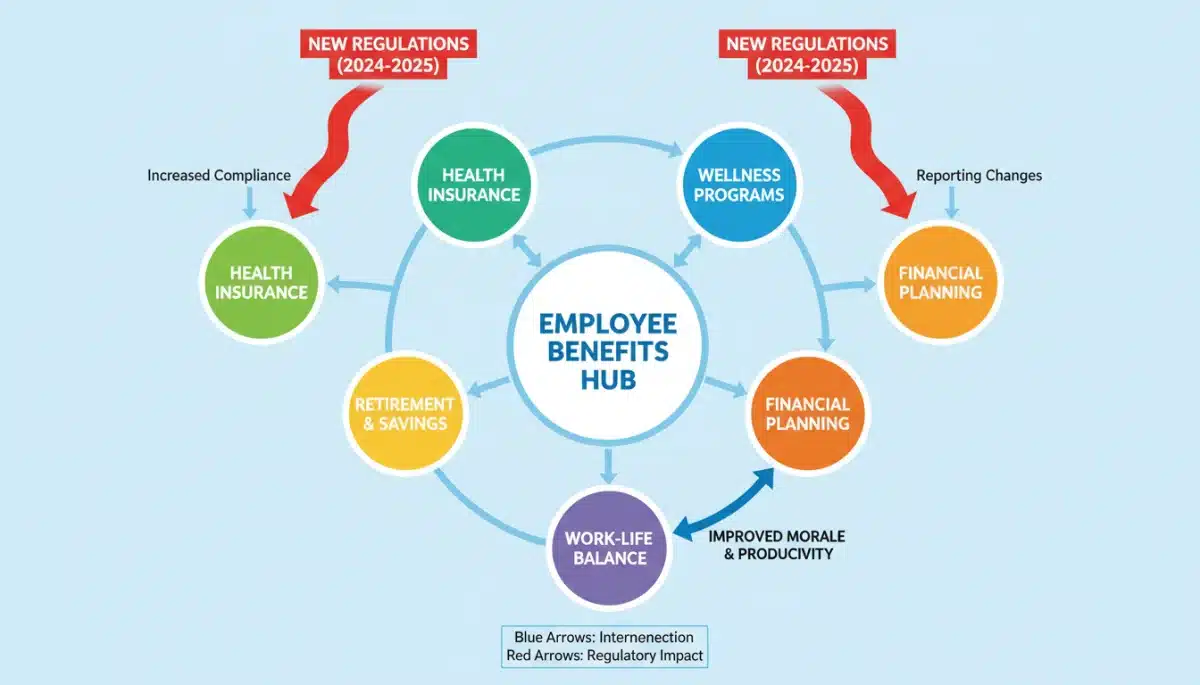
Several legislative and regulatory initiatives are set to influence 2026 employee benefits significantly. These frameworks aim to improve healthcare access, control costs, and enhance transparency, but their implementation will require careful navigation by employers.
Understanding the specific provisions of these new rules, such as potential changes to the Affordable Care Act (ACA) or new state-level mandates, is the first step. Non-compliance could lead to severe penalties, making accurate interpretation and timely adaptation essential for all organizations.
- New federal mandates on preventive care and mental health services.
- Potential adjustments to ACA employer shared responsibility provisions.
- Increased state-specific requirements for health plan offerings.
The interplay between federal and state regulations will create a complex compliance environment. Employers operating across multiple states must be particularly vigilant in monitoring and adhering to diverse requirements related to Employee Benefits.
Key Update 1: Evolving Healthcare Cost Containment Strategies
One of the most pressing concerns for employers and employees is the continuous escalation of healthcare costs. As we approach 2026, new strategies and regulatory pushes are emerging to address this challenge, aiming to create more sustainable benefit programs. These often involve a blend of innovative plan designs and greater transparency requirements.
Employers are increasingly exploring alternative funding models and value-based care initiatives to mitigate rising expenses without compromising quality. This shift requires a deeper understanding of healthcare utilization and provider performance. The focus is on long-term solutions rather than short-term fixes for Employee Benefits.
For individuals, these changes could manifest as new incentives for choosing high-value providers or participating in wellness programs designed to reduce overall health risks. The goal is to empower both employers and employees to make more informed decisions about healthcare spending and utilization.
Focus on Value-Based Care and Price Transparency
The push towards value-based care models is gaining momentum, shifting reimbursement from fee-for-service to outcomes-based payments. This encourages providers to focus on patient health rather than simply the volume of services rendered, potentially leading to better care and lower costs.
New price transparency regulations are also expected to empower consumers by providing clearer information about healthcare costs before services are rendered. This allows employees to shop for care more effectively, fostering competition among providers and potentially driving down prices.
- Mandatory disclosure of negotiated service rates by hospitals and insurers.
- Tools and resources to help employees compare costs for common procedures.
- Incentives for plans that integrate value-based care networks.
These initiatives are designed to make the healthcare market more efficient and consumer-friendly. Employers are evaluating how to best integrate these transparency tools into their benefit platforms to assist employees in Employee Benefits.
Key Update 2: Expansion of Mental Health and Wellness Benefits
Recognizing the growing importance of holistic well-being, 2026 is poised to see a significant expansion in mental health and wellness benefits. This reflects a broader understanding that employee well-being directly impacts productivity and retention. Employers are moving beyond basic offerings to comprehensive support systems.
The increased focus on mental health services is driven by both employee demand and legislative mandates, aiming to achieve parity with physical health coverage. This means more accessible and diverse mental health resources will become a standard component of competitive benefit packages. Companies are investing in these areas.
Wellness programs are also evolving, extending beyond physical fitness to include financial wellness, stress management, and emotional support. These expanded offerings are designed to support employees’ overall health, contributing to a more resilient and engaged workforce. This is a critical aspect of Employee Benefits.
Enhanced Access to Mental Health Services and Telehealth
New regulations and employer initiatives are set to remove barriers to mental health care, ensuring that employees have easier access to therapy, counseling, and psychiatric services. This includes a greater emphasis on network adequacy and reduced out-of-pocket costs for mental health treatment.
Telehealth services, which saw a surge during the pandemic, are expected to remain a cornerstone of expanded mental health access. Virtual consultations offer convenience and reduce geographic barriers, making it easier for employees to seek help when needed.
- Mandated parity for mental health benefits with physical health benefits.
- Increased coverage for virtual mental health therapy and counseling.
- Integration of employee assistance programs (EAPs) with broader wellness initiatives.
These developments signify a positive shift towards destigmatizing mental health issues and providing robust support for employees. Employers are actively seeking providers and platforms that can deliver high-quality, accessible mental health and wellness resources as part of their Employee Benefits strategy.
The integration of mental health and physical health benefits is becoming more seamless. This holistic approach recognizes that both aspects are interconnected and crucial for overall employee well-being and productivity. Companies are looking for innovative solutions that address the full spectrum of employee health needs effectively.
Key Update 3: Greater Emphasis on Personalized and Flexible Benefits
The traditional one-size-fits-all approach to employee benefits is rapidly becoming outdated. In 2026, there will be an increased emphasis on personalized and flexible benefits packages that cater to the diverse needs of a modern workforce. This trend is driven by demographic shifts and varying employee preferences.
Companies are moving towards offering a wider array of choices, allowing employees to select benefits that are most relevant to their individual circumstances. This could include options for healthcare plans, retirement savings, and other perks, providing greater autonomy and satisfaction. Flexibility is key to attracting and retaining talent.
This personalization requires robust benefits administration platforms and clear communication strategies to help employees navigate their options effectively. The goal is to maximize the perceived value of benefits for each individual, ensuring they feel supported and valued by their employer. This is vital for Employee Benefits.
Customizable Health Plans and Lifestyle Benefits
Employers are exploring customizable health plans, such as tiered options or health savings accounts (HSAs) with varying contribution levels, to give employees more control over their healthcare spending and coverage. This allows individuals to choose plans that align with their health needs and financial situations.
Beyond traditional health coverage, lifestyle benefits are gaining prominence. These can include stipends for fitness memberships, educational expenses, childcare support, or even pet insurance, reflecting a broader understanding of what constitutes employee well-being and support.
- Increased offering of High-Deductible Health Plans (HDHPs) paired with HSAs.
- Flexible Spending Accounts (FSAs) with expanded eligible expenses.
- Introduction of lifestyle spending accounts (LSAs) for personalized wellness.
The shift towards personalized benefits aims to enhance employee satisfaction and engagement. By offering choices, employers demonstrate a commitment to meeting diverse needs, which can significantly improve recruitment and retention efforts. This strategic move is central to Employee Benefits effectively.
Key Update 4: Impact of Digital Health and AI on Benefits Delivery
Technology continues to revolutionize how employee benefits are accessed, managed, and utilized. In 2026, digital health platforms and artificial intelligence (AI) will play an even more prominent role in streamlining benefits delivery, improving health outcomes, and enhancing the employee experience. These innovations are transforming the benefits landscape.
AI-powered tools can help employees navigate complex benefit options, identify the most cost-effective care, and receive personalized health recommendations. This reduces administrative burden for HR departments and empowers employees to make better health decisions. The efficiency gains are significant.
Digital health solutions, including remote monitoring devices and virtual care platforms, are becoming integral components of modern benefit packages. These technologies offer convenience, improve access to care, and can contribute to better preventive health outcomes. The future of benefits is increasingly digital.
AI-Powered Benefits Navigation and Predictive Analytics
AI algorithms are being deployed to personalize the benefits enrollment process, guiding employees through complex choices based on their individual health profiles and preferences. This ensures employees select plans that best meet their needs, reducing confusion and improving satisfaction.
Predictive analytics, driven by AI, can help employers forecast healthcare costs more accurately, identify at-risk populations, and design targeted wellness interventions. This proactive approach allows for more strategic allocation of resources and better cost management in the long term.
- AI chatbots for instant answers to common benefits questions.
- Personalized health recommendations based on claims data and health assessments.
- Predictive modeling for anticipating future healthcare trends and costs.
The integration of digital health and AI is not just about efficiency; it’s about creating a more intuitive, supportive, and effective benefits ecosystem. Employers embracing these technologies will be better positioned for Employee Benefits with greater precision and employee satisfaction.
The ethical implications and data privacy concerns associated with AI and digital health must also be carefully considered. Employers must ensure robust security measures and transparent data usage policies to maintain employee trust and comply with evolving regulations. This is a crucial aspect of responsible innovation.
Key Update 5: Renewed Focus on Health Equity and DEI in Benefits
As organizations increasingly prioritize diversity, equity, and inclusion (DEI), the design and delivery of employee benefits are also evolving to reflect these values. In 2026, there will be a renewed focus on ensuring that benefits packages are equitable and accessible to all employees, regardless of background or circumstance. This commitment extends beyond compliance.
This means addressing historical disparities in healthcare access and outcomes, and designing benefits that genuinely support diverse employee populations. It involves a critical review of current offerings to identify and rectify any inherent biases or barriers. Health equity is becoming a core tenet of modern benefits design.
Employers are examining how benefits impact different demographic groups, including those from various racial, ethnic, gender, and socioeconomic backgrounds. The goal is to create an inclusive benefits environment where every employee feels supported and valued. This is an essential component of Employee Benefits.
Inclusive Benefit Design and Addressing Disparities
Inclusive benefit design involves offering a range of options that cater to diverse needs, such as culturally competent healthcare providers, family-building benefits (including fertility treatments and adoption support), and gender-affirming care. This ensures that benefits are relevant and accessible to all employees.
Many organizations are also actively working to reduce health disparities by partnering with community organizations, offering educational resources, and ensuring that their provider networks include diverse practitioners. The aim is to dismantle systemic barriers to quality care for all segments of the workforce.
- Expansion of benefits for family planning and parental leave.
- Inclusion of culturally sensitive health programs and providers.
- Review of benefits for potential biases and inequities for diverse groups.
By prioritizing health equity and DEI in their benefits strategies, companies can foster a more inclusive workplace culture, improve employee well-being across the board, and demonstrate their commitment to social responsibility. This forward-thinking approach is fundamental for Employee Benefits effectively and ethically.
The integration of DEI principles into benefits offerings is not just a moral imperative; it also makes sound business sense. A diverse workforce that feels supported and has equitable access to healthcare is more likely to be engaged, productive, and loyal, contributing to overall organizational success.
| Key Update | Brief Description |
|---|---|
| Cost Containment | Focus on value-based care and price transparency to manage expenses. |
| Mental Health Expansion | Increased access to mental health and wellness services, including telehealth. |
| Personalized Benefits | Shift towards flexible and customizable benefit packages for diverse needs. |
| Digital Health & AI | Integration of AI and digital platforms for benefits delivery and health management. |
Frequently Asked Questions About 2026 Employee Benefits
The changes are largely driven by continued healthcare cost inflation, evolving regulatory landscapes, demographic shifts in the workforce, and a growing emphasis on employee well-being. These factors collectively necessitate a re-evaluation of current benefit structures to ensure sustainability and competitiveness.
Employees may see changes in premiums, deductibles, and out-of-pocket maximums, alongside new incentives for value-based care and increased price transparency. The aim is to empower employees to make more informed decisions, potentially leading to better cost management and utilization of services.
Digital health platforms and AI will streamline benefits navigation, personalize recommendations, and enhance access to care, including mental health services. Technology aims to simplify complex choices for employees and provide employers with better data for strategic planning and cost control.
Employers should conduct thorough audits of current benefit plans, engage with brokers and consultants, invest in robust benefits administration technology, and develop clear communication strategies. Proactive planning and employee education are crucial for a smooth transition and compliance.
Yes, mental health and wellness benefits are expected to see significant expansion. This includes enhanced access to services, greater parity with physical health coverage, and the integration of telehealth, reflecting a growing understanding of holistic employee well-being as a business imperative.
Looking Ahead: Strategic Implications for 2026 Employee Benefits
The upcoming changes in Employee Benefits represent more than just regulatory adjustments; they signify a fundamental evolution in how organizations approach employee well-being and talent management. Employers must view these updates as an opportunity to strategically enhance their total rewards package.
Proactive engagement with these shifts will differentiate leading organizations, positioning them as employers of choice in a competitive market. It’s crucial to move beyond mere compliance and leverage these changes to foster a healthier, more engaged, and resilient workforce. The long-term benefits of such an approach far outweigh the initial investment in adaptation.
Monitoring ongoing developments, collaborating with industry experts, and continuously soliciting employee feedback will be essential for successfully Employee Benefits. The landscape is dynamic, and agility in response will define success in the years to come.