Is Your Degree Future-Proof? 2026 US Education Analysis
Advertisements
Future-Proof Degree 2026 is becoming a central topic in education and career planning as labor market trends and technological changes reshape the US job landscape. Understanding which degrees align with future industries is key for long-term stability.
This 2026 analysis examines how academic pathways connect with emerging sectors and evolving skill demands. Verified insights highlight the importance of adaptability, interdisciplinary knowledge, and technological competence.
By focusing on practical data and expert perspectives, this report helps students and professionals make informed decisions. Choosing a Future-Proof Degree 2026 can strengthen career resilience in an increasingly dynamic economy.
Advertisements
The Shifting Sands of the US Job Market by 2026
The US job market is undergoing a profound transformation, driven largely by rapid technological innovation and changing global economic dynamics. By 2026, many roles that exist today will have evolved significantly, while entirely new professions will have emerged, demanding a different caliber of skills and educational backgrounds.
Automation and artificial intelligence are not just impacting manufacturing; they are increasingly influencing white-collar professions, from finance to healthcare. This necessitates a re-evaluation of educational pathways to ensure they equip graduates with adaptable and resilient skill sets, making a Future-Proof Degree 2026 essential for sustained relevance.
Advertisements
Furthermore, demographic shifts and societal priorities are also playing a role, emphasizing fields related to sustainability, personalized health, and ethical technology development. These forces collectively underscore the urgency for individuals to consider the long-term viability of their chosen educational paths.
Emerging Industries and High-Demand Skill Sets
Several industries are projected to experience significant growth and demand for specialized talent by 2026. These sectors are often at the forefront of innovation, requiring a blend of technical expertise and critical soft skills that traditional degrees may not fully encompass.
Fields such as renewable energy, cybersecurity, advanced manufacturing, and bioinformatics are expanding rapidly, creating a wealth of opportunities. These industries seek professionals who possess not only foundational knowledge but also the ability to learn continuously and adapt to new tools and methodologies, contributing to a Future-Proof Degree 2026 strategy.
Beyond specific technical skills, employers consistently highlight the need for competencies like critical thinking, problem-solving, creativity, and emotional intelligence.
These transversal skills are becoming increasingly valuable as routine tasks become automated, making them indispensable for any degree aiming for long-term career stability.
Technological Advancements Redefining Work
Artificial intelligence, machine learning, and data science are no longer niche areas but foundational elements across diverse sectors. Understanding these technologies, even at a conceptual level, can significantly enhance a degree’s future relevance.
Blockchain technology, virtual and augmented reality, and advanced robotics are also poised to disrupt numerous industries. Degrees that integrate these emerging technologies, or provide a strong analytical foundation to quickly grasp them, are more likely to lead to sustained employment.
- Data Science & Analytics: High demand across all industries for interpreting complex data.
- Cybersecurity: Essential for protecting digital infrastructure in an increasingly connected world.
- AI & Machine Learning: Driving innovation and automation, requiring specialized development and ethical oversight.
- Cloud Computing: Fundamental for modern business operations and scalable technological solutions.
The Growing Importance of Soft Skills
While technical skills open doors, soft skills ensure career progression and adaptability. Employers consistently rank these abilities as crucial for success in collaborative and dynamic work environments.
Communication, teamwork, leadership, and resilience are not easily automated and are becoming more critical as workplaces become more interconnected and project-based. A degree that actively cultivates these attributes will inherently be more future-proof.
- Critical Thinking: Essential for complex problem-solving and strategic decision-making.
- Adaptability & Lifelong Learning: Crucial for navigating rapidly changing technological and economic landscapes.
- Creativity & Innovation: Valued for developing new solutions and approaches in competitive markets.
- Emotional Intelligence: Important for effective collaboration, leadership, and client relations.
Traditional Degrees: Adaptation or Obsolescence?
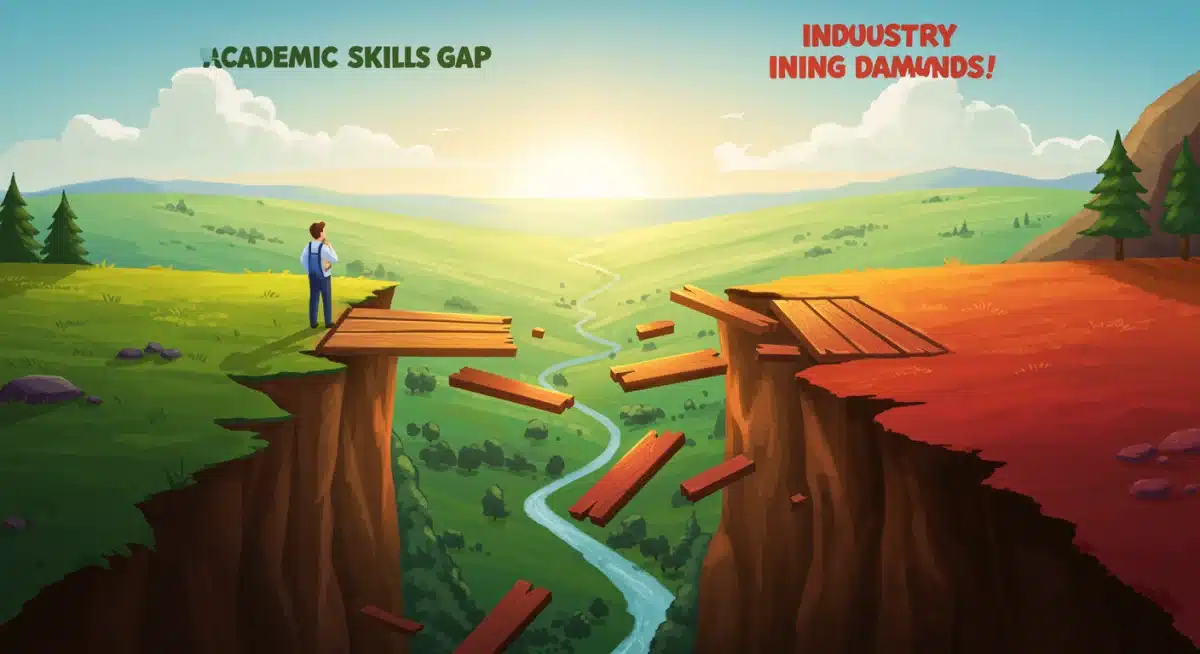
Many traditional degree programs face the challenge of adapting their curricula to remain relevant in a rapidly changing world. While foundational knowledge remains important, the application and context of that knowledge are evolving, impacting whether a degree is truly future-proof.
Disciplines such as liberal arts, while often criticized for their perceived lack of direct career paths, cultivate essential critical thinking and communication skills. Their future-proofing lies in their ability to be paired with specialized technical training or applied in roles requiring strong analytical and ethical reasoning.
Conversely, some highly specialized degrees in fields undergoing rapid automation may need significant re-evaluation. The key is for institutions to continuously update their offerings, ensuring graduates are equipped for current and future industry demands, thereby making their degrees a Future-Proof Degree 2026.
The Rise of Micro-credentials and Alternative Pathways
Beyond traditional four-year degrees, the landscape of higher education is diversifying with the emergence of micro-credentials, bootcamps, and online certifications. These alternative pathways offer flexible and often faster routes to acquiring in-demand skills, directly addressing the need for a Future-Proof Degree 2026.
These programs are particularly effective for upskilling and reskilling professionals, allowing them to quickly adapt to new industry requirements without committing to another full degree. They often focus on practical, hands-on training, bridging the gap between academic theory and workplace application.
Universities are also integrating these models, offering stackable credentials that can eventually lead to a full degree, or standalone certifications that validate specific competencies. This hybrid approach caters to a broader range of learners and career stages, emphasizing continuous learning.
Lifelong Learning: The Ultimate Future-Proof Strategy
In an environment where job requirements are constantly shifting, the concept of a single, static degree providing lifelong career security is increasingly outdated. Lifelong learning has emerged as the most robust strategy for individuals to maintain career stability and ensure their degree remains future-proof.
This involves a commitment to continuous skill development, staying abreast of industry trends, and proactively seeking out new knowledge and experiences. It’s about cultivating a growth mindset, recognizing that education is an ongoing journey rather than a finite destination.
Employers are increasingly valuing candidates who demonstrate a propensity for learning and adaptability. Investing in personal and professional development, whether through formal courses, online platforms, or experiential learning, directly contributes to securing a Future-Proof Degree 2026 and a resilient career path.
Navigating Educational Choices for 2026 and Beyond
Prospective students and mid-career professionals face complex decisions when choosing educational pathways. The key is to select programs that offer a strong foundational education combined with opportunities for specialization and continuous skill acquisition, ensuring their degree is a Future-Proof Degree 2026.
Researching specific job market projections, understanding the skills gap in various industries, and seeking advice from career counselors and industry experts are crucial steps. It’s also important to consider the reputation and industry connections of educational institutions, as these can significantly impact post-graduation opportunities.
Ultimately, the most future-proof degree is one that empowers individuals with critical thinking abilities, problem-solving skills, and the capacity for self-directed learning. These attributes enable graduates to pivot and thrive in an unpredictable professional landscape, making their education truly resilient.
The Role of Interdisciplinary Studies in Career Stability
The modern workforce increasingly values individuals who can bridge different fields of knowledge, creating innovative solutions at the intersection of disciplines. Interdisciplinary studies, therefore, play a crucial role in making a degree a Future-Proof Degree 2026.
Degrees that combine technology with humanities, business with environmental science, or arts with data analytics, foster a unique perspective and a broader skill set. These programs train individuals to think holistically, critically analyze complex problems, and communicate effectively across diverse teams.
This ability to integrate knowledge from various domains is highly sought after in industries grappling with multifaceted challenges, from ethical AI development to sustainable business practices. Such degrees enhance adaptability and open up a wider range of career opportunities, bolstering long-term stability.
Policy and Institutional Responses to Future-Proofing Education
Educational institutions and policymakers are keenly aware of the need to adapt curricula to meet future workforce demands. Efforts are underway to reform higher education, focusing on outcomes-based learning and closer collaboration with industry to ensure degrees are future-proof.
Initiatives include developing more flexible degree structures, integrating experiential learning opportunities, and fostering partnerships that provide students with real-world skills and industry exposure. The goal is to reduce the skills gap and enhance graduate employability, directly contributing to a Future-Proof Degree 2026 for students.
Government policies are also playing a role, with investments in STEM education, vocational training, and lifelong learning programs. These systemic changes are crucial for creating an educational ecosystem that supports continuous adaptation and prepares the workforce for the challenges and opportunities of the future.
| Key Aspect | Impact on Future-Proof Degree 2026 |
|---|---|
| Technological Integration | Degrees incorporating AI, data science, and cybersecurity are highly valued. |
| Soft Skills Development | Critical thinking, adaptability, and communication are essential for long-term career stability. |
| Lifelong Learning Mindset | Continuous upskilling and reskilling are crucial for staying relevant in evolving markets. |
| Interdisciplinary Approaches | Combining diverse fields enhances problem-solving and innovation capabilities. |
Frequently Asked Questions About Future-Proof Your Degree
A future-proof degree combines strong foundational knowledge with adaptable skills like critical thinking, problem-solving, and digital literacy. It often integrates emerging technologies and encourages continuous learning, preparing graduates for evolving industry demands and making their degree a Future-Proof Degree 2026.
Yes, humanities degrees remain relevant by fostering essential soft skills such as communication, ethical reasoning, and critical analysis. When combined with practical technical skills or specialized training, they can lead to strong career stability, proving that even these degrees can be a Future-Proof Degree 2026.
Micro-credentials offer targeted, in-demand skills quickly and flexibly, allowing professionals to upskill or reskill without a full degree. They validate specific competencies highly valued by employers, enhancing adaptability and making a degree more resilient to market changes and contributing to a Future-Proof Degree 2026 strategy.
Industries like renewable energy, cybersecurity, advanced manufacturing, data science, and personalized healthcare are expected to experience significant growth. Degrees aligned with these sectors, or those providing adaptable skills, are more likely to be a Future-Proof Degree 2026.
Lifelong learning is crucial for sustained career stability, as it ensures individuals continuously update their skills and knowledge to meet evolving job market demands. It’s an essential strategy for maintaining relevance and ensuring one’s degree remains a Future-Proof Degree 2026.
Looking Ahead: Preparing for the Evolving Professional Landscape
The analysis of Degree Future-Proof highlights that education is no longer a one-time milestone. Instead, it has become a continuous process of learning and adaptation.
Both individuals and institutions must adopt a proactive approach to skill development and curriculum modernization. Lifelong learning and ongoing upskilling are increasingly necessary in a rapidly changing job market.
As AI and automation continue transforming industries, pursuing a Future-Proof Degree 2026 becomes an evolving journey. Long-term success depends on adaptability and strategic investment in versatile education.